
As a consequence of a country so rich in culture as Nepal, it is not always necessary to travel to a faraway land to see it. Indeed, the Kathmandu Valley is the best place to enjoy the culture of Nepal. The valley has been the seat of social, cultural, and economic power since time immemorial. Take a guided tour of the UNESCO World Heritage Sites in the Kathmandu Valley. Nepal has 8 cultural and 2 natural sites on the list of UNESCO World Heritage Sites. 7 of them are only in the Kathmandu Valley. So, walk along the paved roads and streets of the Kathmandu Valley, and enjoy a look at some of the best examples of the Eastern style of architecture.
1. Boudhanath Stupa
Importance: UNESCO World Heritage
Category: Cultural
It is said to be the largest Buddhist temple in Southeast Asia. The old, huge Chorten was constructed by the King’s Men in the 6th century AD. It consists of a series of terraces and a bird’s-eye view, which assumes the desired form of a lotus flower, which is, indeed, a most sacred object for all the most devout followers in the world.
It consists of a series of terraces and a bird’s-eye view, which assumes the desired form of a lotus flower, which is, indeed, a most sacred object for all the most devout followers in the world.
view, are accountable, and are surrounded by a circular market, which is part of their city. In this case, also, the followers of Terracesuddha’s eyes provide a bright flash of light in the four cardinal directions, which means the diligent observation of the people and their duties throughout the day and night. They are accountable, including the true Mahayana philosophy, a belief in what is referred to as Lamaism in Sikkim, Ladakh, Bhutan, and Tibet.
2. Pashupatinath Temple
Importance: UNESCO World Heritage
Category: Cultural
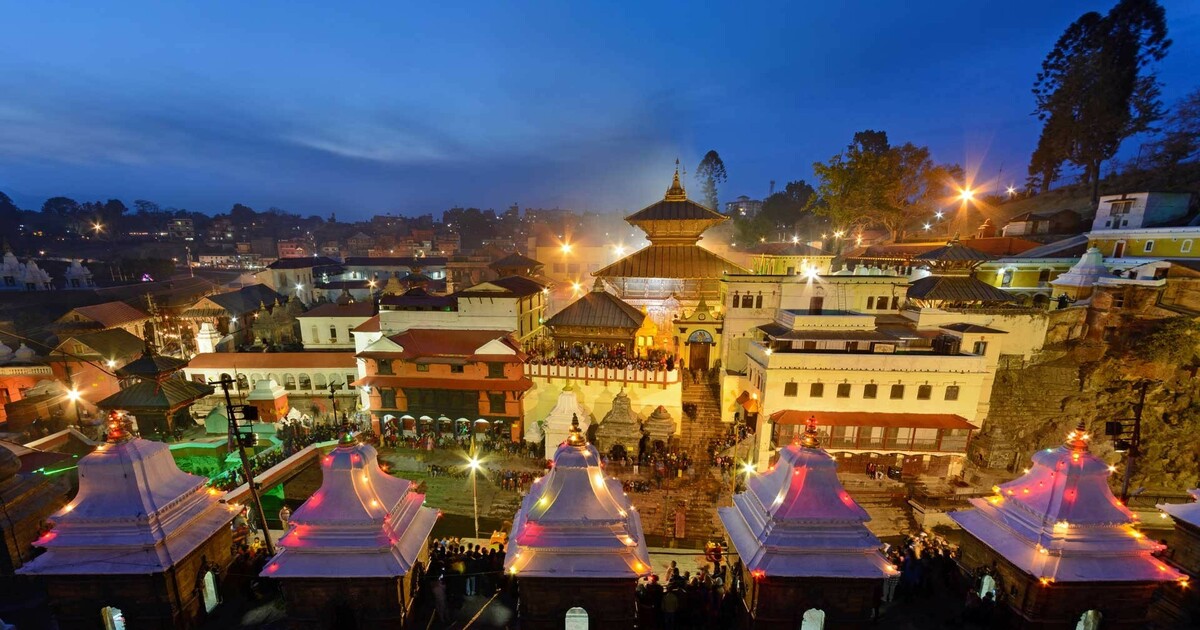
This pagoda-style Hindu temple with a golden roof and richly carved silver doors is dedicated to Lord Shiva and is situated on the banks of the holy Bagmati River. One of the most sacred temples of the religion across the world, the Pashupati Nath Temple is in the heart of the city of pilgrimage.
In the small, religious town, there is a large temple, which is also known as Debpatan, and it is located 5 km southeast of the city. Only Hindus can enter the courtyard of the temple. Foreign tourists can visit the temple on the east side of the Bagmati River.
3. Kathmandu Durbar Square
Importance: UNESCO World Heritage
Category: Town
It’s easy to be confused by the seemingly countless number of monuments in Kathmandu’s Durbar Square. The house of the Living Goddess (Kumari Ghar), the brutality of Kal Bhairab, the red monkey god, and hundreds of erotic images are just a few examples in the square! The buildings here are the greatest achievements of the Malla dynasty, and it was the result of the clash between the three palaces of Kathmandu, Patan, and Bhaktapur.
The valley was divided among the sons of Yaksha Malla. For today’s guests, and in Nepal, it was a happy coincidence that they, and their descendants, the artists, started a war to try to outdo each other in the great buildings. The kings copied from all of their neighbors and built in an even grander style.
A visitor is walking around the square, around the pagoda-style temple, the temple of the goddess Taleju (the legend has it that she used to play dice with the King Jaya Prakash Malla and the image of Lord Shiva and Parvati), as well as among the many attractions. The square was filled with vibrant life. Around the Kastamandap house, vendors sell vegetables, fruit, flutes, and other arts and crafts. The house is said to have been constructed from the wood of a single tree and is the source from which the Kathmandu Valley is named.
In the vicinity of the great vessels, which have been battered, the announcement of the royal decree. All the wood carvings, sculptures, and architecture in the area are very nice, and Kathmandu Durbar Square is one of the most important tourist attractions. There is also a museum within the complex that houses the Tribhuvan Museum, which includes gifts from various Shah kings.
4. Swayambhunath Stupa
Importance: UNESCO World Heritage
Category: Cultural
It is assumed to be 25 years old and is one of the oldest Buddhist chaityas in the world. The great stupa of Swayambhu—it is a miracle of Nepal; the glory is there. Indeed, it is listed as a UNESCO World Heritage Site to prove that it acts as a nerve center and a loyal cult following—and for all religions and philosophies, on Instagram in particular, and you have to respect the Adi-Buddha.
It is dedicated to the self-born, the god of fire. The stupa, which provides a clear structure, is composed of a solid hemisphere of terracotta tiles and the bottom, with the support of a molding of brass and plated with gold. A four-sided spiral painting, based on the spiral, is the all-seeing eyes of the Buddha, which look at the audience from the Valley, which distinguishes vice and virtue.
It is located about two kilometers to the west of the city of Kathmandu, on the opposite bank of the holy river of the Bagmati. Located on the top of a hill, some 500 feet above the valley level.
Boudhanath is a mosaic of small chaityas and pagodas, temples, with large stupas (Lamaism) and Hinayana (Buddhism). It is a major Buddhist temple located on the Hind Hill; it was called Manjushri. This is the Chinese Buddha and the God of all Knowledge.
5. Bhaktapur Durbar Square
Importance: UNESCO World Heritage
Category: Cultural
Bhaktapur is located very close to the capital city, but it is a different planet, which makes a big difference in the feel and sense of history. Well, it feels real; despite the gradual intrusion of satellite antennas, not much has changed over the centuries.
There are a lot of places in between: the focal points of the Durbar Square, Thaumadhi Square, and Instagram Square, and it would be impossible to describe them all in detail. However, a walk around the city in a hurry will not let your sense of awe and admiration for its perfectly preserved climate, which, however, has its own prosaic life.
Bhaktapur is home to the National Woodcarving Museum, the Bronze and Brass Museum, and the National Art Gallery. Visit the Lion’s Gate, the gallery, the Golden Gate Bridge, the Palace of Fifty, etc. Four kilometers away is the beautiful Changu Narayan Temple, which dates back to the 4th century AD. The building itself dates back to the 7th century; however, many of the pictures, which you can find here, all have a long history and are of a relatively non-touristy nature. The temple is one of the most popular temples for sightseeing in Kathmandu. Bhaktapur, literally meaning the city of devotees, is well known for its fine art, vibrant culture, colorful festivals, traditional dances, and a typical Instagram lifestyle. The City of Nepal feels that the visit will not be complete if they don’t get a fascinating glimpse of the old city of culture. The old dances and other celebrations are still observed by the people, with the same zeal and enthusiasm as their ancestors did in the past.
The 15th-century king added to the city. For centuries, Buddhists and Hindus have coexisted peacefully and found inspiration in one another. Painting, sculpture, concrete, bronze casting, jewelry, ceramics, and other crafts are practiced by the predominantly peasant population of Bhaktapur. The city’s historic center is dotted with attractions and artwork made of metal, wood, and stone. Directly to the winding, narrow streets that encircle and lead to Nepal’s medieval settlements.
6. Patan Durbar Square
Importance: UNESCO World Heritage
Category: Cultural
The Patan Durbar Square complex, situated in the heart of the town of Patan, also known as Lalitpur City of the Arts, is the headquarters of the erstwhile royal family of Patan. In the square, the room is a good example of the old style of architecture.
Mul Chowk, Sundari Chowk, and Keshav Narayan Chowk are the three courtyards that make up the palace. Mul Chowk, the oldest one, is located in the center of Patan Square. Located in the western part of the complex, there are several big pieces as well as a multi-level piece. The most important of the Lord Krishna Temples are the Bhimsen Temple and the Golden Hiranya Temple.


Comment (0)